 Santa Cruz, Scotts Valley CA
Think about what your jaw is doing right now.
Are your teeth touching? Are you holding tension in your face? Is your jaw slightly clenched while you’re concentrating?
Many people don’t realize how often they tighten their jaw muscles throughout the day.
While occasional clenching may not cause problems, frequent or sustained jaw muscle activity can contribute to discomfort in some individuals.
Stress, concentration, sleep habits, and existing jaw conditions can all influence how the jaw feels.
If you’ve been experiencing facial tension, jaw soreness, or recurring headaches, understanding these patterns may help you identify habits worth changing.
What Is Teeth Clenching?
Teeth clenching occurs when you press your upper and lower teeth together, often with significant muscle force.
It is a form of bruxism, which also includes grinding and other repetitive jaw muscle activity.
Bruxism can occur while you’re awake or asleep.
Awake bruxism may involve sustained tooth contact, clenching, or bracing the jaw during concentration or emotional stress.
Sleep bruxism involves jaw muscle activity during sleep and may be associated with sleep arousals and other factors.
These two patterns are related but not identical.
How Does Stress Affect Your Jaw?
When you’re stressed, your body may respond with increased muscle tension.
Some people notice this tension in their shoulders or neck, while others hold it in their jaw.
During busy workdays, driving, studying, or emotionally demanding situations, you may unconsciously press your teeth together.
Over time, repeated muscle loading can contribute to soreness or fatigue in susceptible individuals.
Stress doesn’t explain every TMJ disorder, but it can be one factor that influences pain.
What Are the Signs of Excessive Teeth Clenching?
Clenching doesn’t always produce an obvious grinding sound.
Possible signs include:
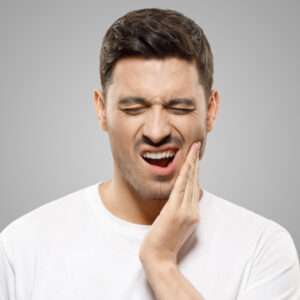
- Sore jaw muscles
- Facial tension
- Headaches around the temples
- Tooth sensitivity
- Difficulty relaxing the jaw
- Tenderness while chewing
- Worn or damaged teeth
- Morning jaw stiffness
These symptoms can have multiple causes.
A dental examination can help determine whether clenching is contributing to the problem.
How Can Clenching Contribute to TMJ Pain?
Your jaw joints and chewing muscles work together whenever you speak, eat, or move your mouth.
Sustained clenching increases the workload placed on the chewing muscles.
For some individuals, this can aggravate muscle pain and contribute to tenderness around the jaw and temples.
However, TMJ disorders involve several possible conditions affecting muscles, joints, and surrounding structures.
Not every person who clenches develops a TMJ disorder, and not every TMJ disorder is caused by clenching.
Why Does Your Jaw Hurt More During Stressful Weeks?
People experiencing persistent pain often notice that symptoms fluctuate.
During stressful periods, you may clench more frequently, sleep less consistently, or become more sensitive to discomfort.
These factors can interact and make jaw symptoms feel worse.
For example, someone who spends hours concentrating at a computer may repeatedly tighten their jaw without realizing it.
Increasing awareness of this habit may help reduce unnecessary muscle activity.
How to Relax Your Jaw During the Day
If you notice frequent clenching, small changes may help.
Keep Your Teeth Slightly Apart
When you’re not chewing or swallowing, your teeth generally don’t need to remain in contact.
Allowing your jaw to rest comfortably can reduce unnecessary muscle loading.
Check Your Jaw During Concentration
Pay attention to your jaw while working, driving, exercising, or using your phone.
You may discover that clenching occurs during specific activities.
Take Short Movement Breaks
Brief breaks can help you notice tension in your jaw, neck, and shoulders.
Gentle relaxation may be useful, especially during long periods of concentration.
Avoid Overworking Sore Jaw Muscles
If your jaw is painful, temporarily reducing gum chewing and very hard foods may help.
Address Stress and Sleep Habits
Stress-management techniques, regular sleep routines, and appropriate healthcare support may help reduce some contributing factors.
These strategies aren’t guaranteed to stop bruxism, but they may support overall symptom management.
Can a Night Guard Help With Clenching?
A dental night guard may be recommended when nighttime bruxism is causing tooth damage or other concerns.
The appliance creates a protective surface between the teeth.
However, a night guard doesn’t necessarily stop the muscles from clenching.
It also doesn’t automatically treat the underlying cause of jaw pain.
For patients with TMJ symptoms, the type of appliance and treatment plan should be selected carefully.
When Is Professional TMJ Treatment Necessary?
Consider a dental evaluation if you experience persistent jaw pain, tooth damage, painful chewing, or difficulty opening your mouth.
A clinician may assess your jaw muscles, joints, teeth, and functional movement.
Treatment often begins with conservative approaches such as education, self-management, physical therapy, or selected oral appliances.
More invasive treatments are generally reserved for specific conditions that haven’t responded to appropriate conservative care.
Find Relief From Jaw-Related Dental Concerns in Scotts Valley
Your jaw muscles work throughout the day, but they shouldn’t leave you constantly uncomfortable.
At Ebrahimian Integrative Dentistry, we consider the relationship between oral health, jaw function, and everyday habits when evaluating dental concerns.
If you’re experiencing clenching-related tooth wear, facial tension, or recurring jaw discomfort, our Scotts Valley office can help you explore potential contributing factors.
Ebrahimian Integrative Dentistry
5 Erba Ln, Suite A
Scotts Valley, CA 95066
Call (831) 438-4411 to schedule an appointment.